
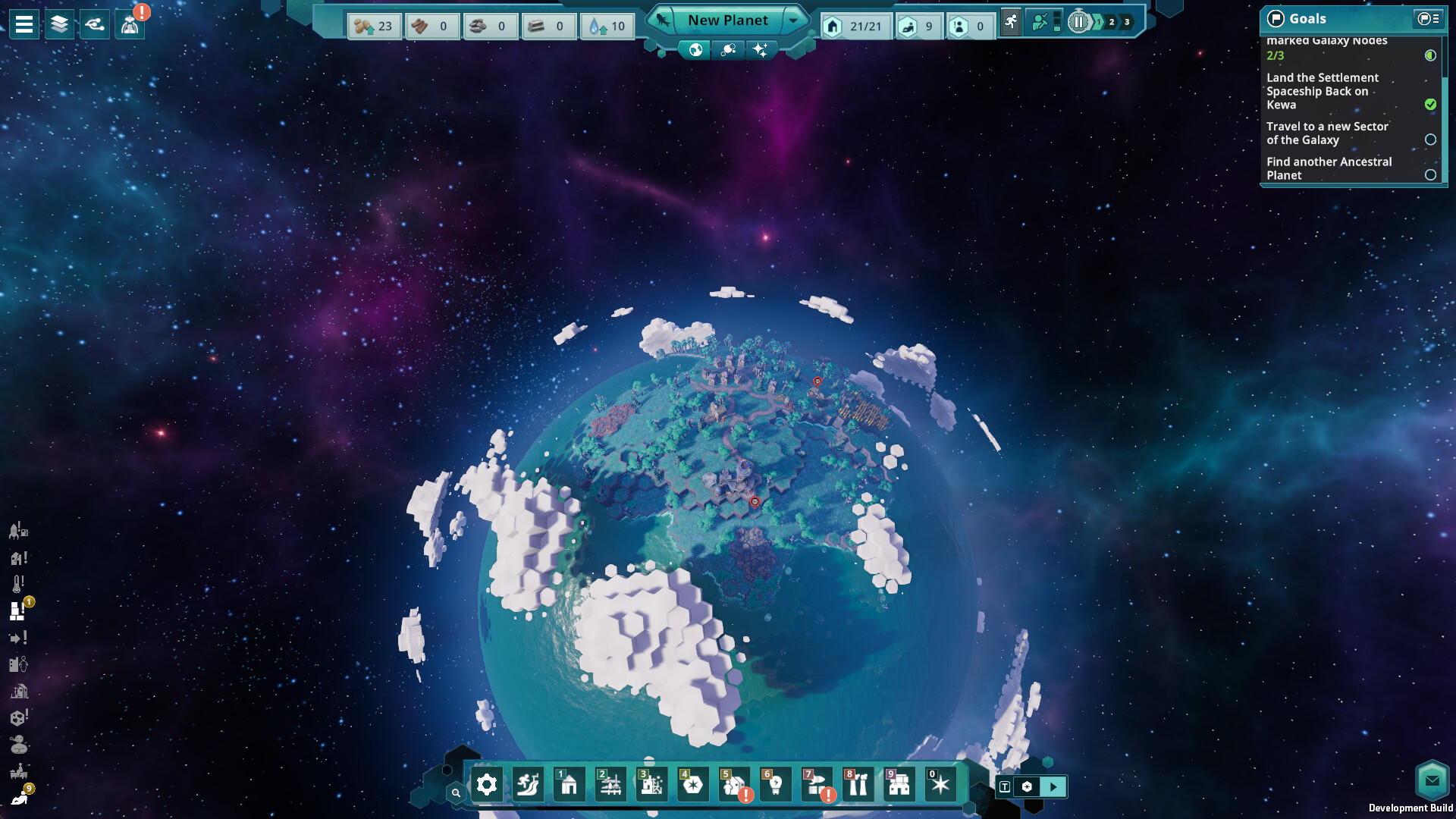
Organize resources by their role
The collected Resources reference distinguishes natural resources, food and drink, and synthesized goods. That organization gives you a practical way to separate the things gathered from the environment from the goods produced through industry and the supplies used by citizens. Wood, stone and iron are identified as resources supporting the early settlement, rather than a complete catalog of every material in the full game.
Use those categories to understand what a shortage will affect before adding another production building. A lack of a construction material raises a different immediate question from a lack of food, while a missing manufactured input points toward a connected production process. Keeping the roles separate makes it easier to trace the part of the economy associated with the particular good you need.
Follow manufactured goods back to their inputs
A manufactured resource belongs to a process which needs its own inputs and support. The collected Ore Smelter material describes ore being refined into metal while requiring power, giving a concrete example of that relationship. Seeing a demand for metal does not establish that the building producing it has all of the conditions required to continue its work.
For a shortage, inspect the producer and the supplier of the inputs it needs before assuming another copy of the producer is the answer. Establish where the missing part of the chain begins and whether the supporting connection is functioning. This is the dossier’s diagnostic recommendation, not an invented recipe table or a numerical claim about the ideal balance between mines and smelters.
Treat by-products as part of output
The main manufactured good is not necessarily the only material produced by an industrial building. The collected Resources and Ore Smelter references both identify soot as an industrial by-product, so it needs to be included in resource planning. A production area has to account for the resulting material even when the reason for building the industry was its metal output.
Give that by-product a destination in the storage and consumption plan rather than treating it as something the game automatically removes. Check both outputs when a producer stops, especially if there is still demand for the main product. That distinction follows the documented storage mechanism and avoids assuming that every industrial material is either useless waste or interchangeable with the product you intended to make.
Check full storage as well as missing inputs
The collected Storage reference explains that full output storage can halt a producer, including a blocked by-product output. A building can therefore be unable to continue even when it has the input resources you first thought to inspect. Input supply and output capacity are separate checks which belong in the same investigation of a stalled production chain.
Start with the affected building, inspect its supplier and then review the destination for each output. Identify the resource whose movement has stopped before adjusting a storage allocation elsewhere in the town. This keeps the change specific to the documented obstruction instead of adding general capacity and hoping that it happens to serve the material causing the shortage.
Reserve resources before expanding demand
The dossier recommends creating a small buffer before ordering several buildings which consume the same material. That is a planning suggestion based on the connection between resources and construction demand, rather than a fixed reserve amount established for every settlement. Its purpose is to keep a group of new decisions from competing for supplies you have not yet checked.
Review what the next production stage will need before committing the same stockpile to several projects. Consider whether the existing supplier and storage arrangement can support the decision you are about to make. A visible reserve and an understood destination are more informative than an unsupported promise that one numerical resource threshold is sufficient for all expansion.
Plan planetary resources as a supply task
The collected settlement previews explain that other planets offer resources unavailable at home. That expands the set of materials your civilization can obtain, but it also introduces the task of connecting a new source with the settlement that needs its output. Discovering a material elsewhere and having a continuing useful supply of that material are different stages of the same plan.
Treat the new resource as an additional supply problem rather than an instant upgrade to every building on Kewa. Establish how the planetary source will support the home settlement and what the outpost itself needs to begin useful work. This follows the purpose recorded in the exploration material without claiming a permanent transport guarantee or a complete verified catalog of planetary deposits.
Ask where the resource belongs next
For every resource shortage, identify whether you are missing a raw source, a manufactured output or the supplies associated with a household. Those categories help locate the part of the settlement that should be inspected first. The same general question can otherwise lead you toward an unrelated storage or industry expansion because the overall inventory does not describe how a particular resource is being used.
When a producer has its inputs but remains unable to continue, examine all of its output destinations rather than only the good you want. Soot and the main output of a smelter belong to the same industrial process while serving different resource roles. Keeping both in the resource plan gives you a supported reason to inspect by-product storage instead of assuming the raw material source has failed.
For a planetary material, check the home consumer and the new source as parts of one supply task. The resource can be genuinely available on another world without already being a reliable input for the particular building on Kewa. Planning the connection and destination is the next useful question after discovery, not proof of an undocumented automatic transfer or an unlimited transport route.
Choose the next expansion only after you have identified the resource and the connection it is meant to improve. A small reserve can support construction planning, while a working input and output arrangement supports production which uses that reserve. Those are practical distinctions based on the collected systems rather than a complete recipe spreadsheet or a fixed stockpile requirement for every settlement.
Diagnose before scaling the whole chain
A useful resource review begins with the good that is missing and follows its producer, input connection and output destinations. Correct one observed obstruction, allow the affected chain to operate and then decide whether the original shortage still needs further expansion. That order keeps a storage problem from being mistaken for a lack of production or a missing input from being mistaken for a housing problem.
The collected research does not establish a complete launch recipe spreadsheet, a replenishment rule for every deposit or exact building ratios. Use the documented categories and mechanisms to examine the resources in your settlement rather than filling those gaps with invented quantities. The storage, supply-chain and outpost guides continue the questions associated with movement, blocked outputs and resources beyond your home world.
Sources & research scope
Game information on this page comes from the sources recorded in the dated research. Publisher-hosted wiki entries are community-maintained, and review judgments remain attributed to their writers. Planning advice applies those documented systems and does not claim personal playtesting.
- Resources — Beyond These Stars Official WikiPublisher-hosted community wiki; mechanics from the collected research snapshot. Cited by name from the dated dossier; this source is not linked here.
- Storage — Beyond These Stars Official WikiPublisher-hosted community wiki; mechanics from the collected research snapshot. Cited by name from the dated dossier; this source is not linked here.
- Settleable Planets: Dev Blog #19Developer or official storefront material recorded in the research dossier.
- Ore Smelter — Beyond These Stars Official WikiPublisher-hosted community wiki; mechanics from the collected research snapshot. Cited by name from the dated dossier; this source is not linked here.
- LadiesGamers: Beyond These Stars ReviewAttributed PC review coverage; opinions and build observations belong to the reviewer.