
Build the settlement around basic needs
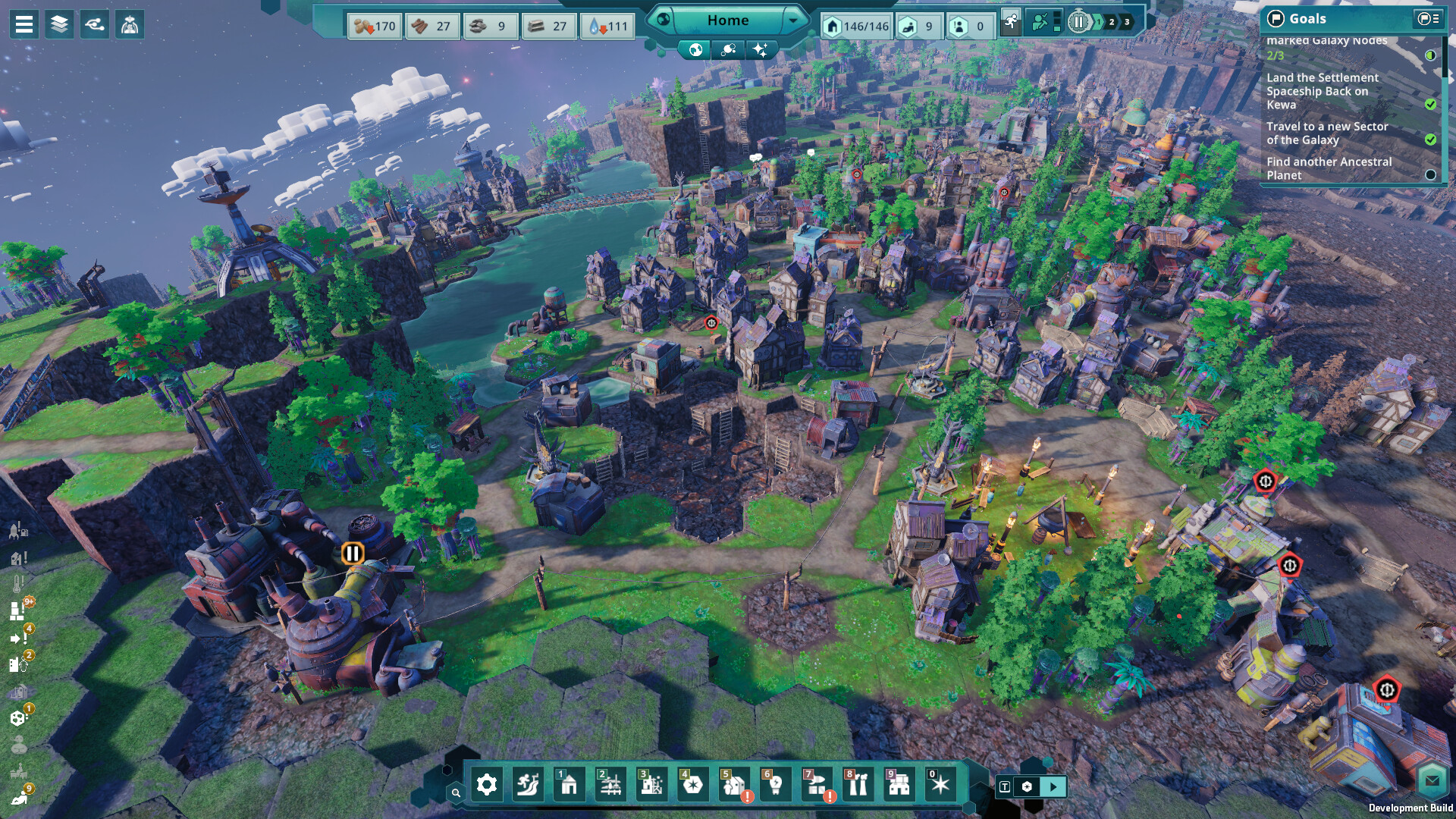
Your first priorities are the people who will operate the settlement, the places where they live and the supplies they use during breaks. The collected Home Spaceship material describes a starting source of basic goods and additional Peeps entering the settlement as housing becomes available. This makes housing part of your production plan as well as a place for citizens to recover between shifts.
Start by checking shelter, food and water together rather than treating each as an unrelated building project. A new workplace is less useful when the people expected to run it cannot reach it from their homes or obtain their basic supplies. A manageable opening settlement gives you a smaller set of connections to inspect when something stops working, without requiring an invented universal building order.
Use the starting ship as a starting point
The Home Spaceship supplies basic starting goods, including the food and water that support the first settlement. Those supplies help you begin, but the dossier identifies dedicated production and storage as necessary as the population and economy grow. Use the starter supply to establish those connections rather than assuming it will replace every later source of the same resource.
For the initial food supply, the collected sources identify potatoes from the ship and additional production from potato patches. For water, the ship provides a small starter source and pumps provide a route toward a larger supply. These are concrete starting systems to learn before you plan more complex industry or count on resources from planets you have not yet settled.
Keep jobs within reach of homes
The collected Peeps reference states that workers choose jobs within 16 tiles of home and return home to recover between shifts. That relationship makes the location of housing relevant to staffing rather than merely the appearance of the town. A workplace placed beyond the documented reach of nearby homes is not equivalent to a workplace with a usable residential connection.
When an intended producer is not doing useful work, examine the connection to housing before adding another copy of the building. Check road access and whether the homes associated with the area are close enough to support the work you are planning. This is a diagnostic approach drawn from the documented movement and staffing relationship, not a claim that every idle building has the same cause.
Check supplies at the homes that need them
Peeps bring food and drink resources home and use them during breaks, according to the collected reference on citizen behavior. A settlement-wide stockpile therefore answers a different question from whether an individual household can access the resources it needs. Keep production, storage and the homes receiving those resources in the same review when you are trying to understand a shortage.
If food or water appears to be missing, begin with the relevant source and follow its connection toward the affected homes. Establish whether the problem concerns production, stored goods or access before deciding which part of the town to expand. This keeps the decision tied to a visible need instead of an unsupported fixed number of farms, pumps or storage buildings per Peep.
Include storage in every production decision
A production building needs a way to obtain inputs and move its outputs, and the collected storage material explains that full outputs can stop work. The blocked output may be a by-product rather than the main good you are trying to obtain. Expanding the main production chain without looking at all of its outputs can leave the original obstruction in place.
Before committing to a larger production area, ask where its inputs will come from and where each output will be held or consumed. Inspect a building that is underperforming rather than assuming the whole settlement requires more producers. Solving a particular obstruction and observing the result is a practical recommendation from the dossier, not a playtested promise of a particular production rate.
Learn the in-game guide before expanding
The updated demo announcement confirms a Player Guide, revised tutorials and additional explanations of the game’s systems. That gives new players an in-game source to consult before making a large change to the settlement. Use it alongside the visible condition of your current town, especially when a building or resource behaves differently from an older description.
Pause periodically to choose the next bottleneck rather than attempting several production stages at once. Keeping a separate save before a substantial terrain change or expansion is also a general planning recommendation recorded in the research. It preserves the opportunity to compare your decisions without presenting an unverified reset, rush strategy or fixed opening timetable as part of the game.
Review the first expansion before committing
Look at the purpose of the next building before treating it as a necessary addition to the settlement. If its role is to supply basic food or water, follow that resource to the homes expected to receive it; if its role is production, inspect the inputs and destinations involved. This connects the expansion to the specific need you have identified instead of building a second district simply because there is room for one.
Keep the starter ship, dedicated producers and storage allocations in the same review when the town begins depending on more goods. The opening source and a later production chain can contribute to the same settlement while raising different questions about access and output. Tracing the goods through the arrangement makes it easier to choose a useful next step without assigning an unverified numerical target to the whole population.
When a workplace remains idle, inspect its relationship with the nearby homes and the roads that keep the area accessible. Then examine the materials going in and the goods coming out before deciding that the opening housing or production plan needs a larger change. This avoids confusing a staffing connection with a full output or a resource shortage merely because all three can leave a building doing less useful work.
The goal of the opening settlement is an arrangement you can understand and maintain as further systems appear. Use the Player Guide when the next question concerns a building or resource description, and preserve a separate save before a large planned change. Those habits support the documented foundations without turning the first settlement into a challenge with an invented deadline or a required population count.
Expand from a stable base
Housing, supplies, reachable jobs and storage form a connected opening task, so review the complete arrangement before adding another district. An expansion that increases demand without improving the connection to essential resources can make a previously understandable shortage more difficult to diagnose. Keep your next construction decision focused on a need that you can identify in the settlement you already have.
This guide covers the documented foundations rather than a universal first-hour blueprint. The collected material does not establish an optimal farm-to-population ratio or a build order that succeeds within a guaranteed amount of time. Once the first settlement is stable, the resource, storage and city-layout guides offer more focused explanations of the next questions you are likely to face.
Sources & research scope
Game information on this page comes from the sources recorded in the dated research. Publisher-hosted wiki entries are community-maintained, and review judgments remain attributed to their writers. Planning advice applies those documented systems and does not claim personal playtesting.
- Home Spaceship — Beyond These Stars Official WikiPublisher-hosted community wiki; mechanics from the collected research snapshot. Cited by name from the dated dossier; this source is not linked here.
- Peeps — Beyond These Stars Official WikiPublisher-hosted community wiki; mechanics from the collected research snapshot. Cited by name from the dated dossier; this source is not linked here.
- Beyond These Stars — New Demo Launch!Developer or official storefront material recorded in the research dossier.