
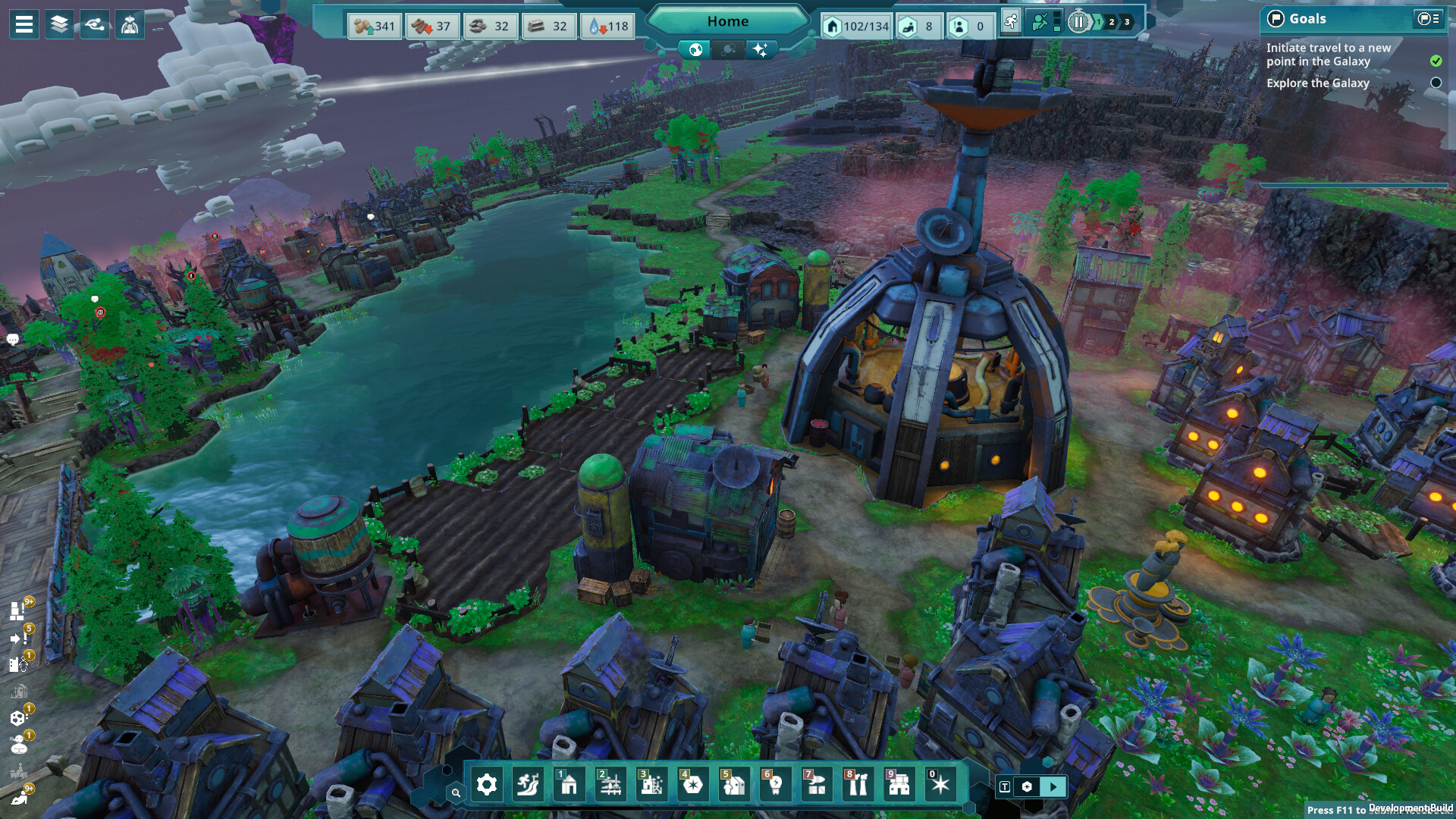
Check the condition of the target land
The collected Biome reference distinguishes watered and dry terrain, dirt and bare ground, and breathable and non-breathable areas. These are separate conditions to examine when deciding how to expand the usable land around a settlement. Looking at only one of them can leave an important part of the habitat question unanswered.
Inspect the target tile’s condition before selecting the next terraforming action, as the dossier recommends. Establish whether the immediate need is water, suitable soil or a larger pocket of breathable air rather than treating them as one change. This makes the next action respond to a documented condition instead of a visual impression that the ground appears green enough to use.
Restore dry forests through water flow
The collected Forest material links water flow with reviving dry forest. Reviving that forest expands the air pocket associated with it, which is the documented relationship behind the first part of atmosphere expansion. The Biome and Forest references both connect watered forests with breathable space, giving the water network a role beyond the appearance of the landscape.
Plan a small extension of the water network and inspect the result before repeating the action over a larger area. This is the practical approach recorded in the research, not a promise that every water change will produce the same amount of new atmosphere. Check the affected forest and surrounding land after the change so that the next decision follows the condition you can observe.
Prepare bare ground when necessary
Water and soil are separate checks in the collected biome description. Bare ground may need composting to become fertile, so supplying water alone does not establish that every target area has the soil condition associated with further restoration. Inspect the ground itself alongside the nearby forest and water flow when deciding what to do next.
Choose the action associated with the condition that remains unresolved rather than automatically repeating the previous change. If the area has received water but still does not have suitable soil, the planning question has shifted to a different part of the biome. This distinction follows the collected material without turning it into an invented recipe, cost or fixed timetable for terraforming.
Plant additional forests as you expand
The Forest reference identifies planting as a way to extend the atmosphere further after restoring the existing dry forest. The dossier describes doing this as terraforming becomes available, so the surrounding habitat and the settlement’s progression belong in the same plan. Planting is a documented expansion mechanism, rather than a guarantee that every tree arrangement produces an identical result.
Leave room for the forest connection when planning where new buildings will go. Review the condition of the restored area before committing the surrounding terrain to another large district. This keeps atmospheric expansion attached to the land you intend to use, without asserting a universal forest radius or an oxygen percentage not established in the research.
Do not judge breathability by color alone
A green-looking area does not by itself prove that every relevant tile is habitable. The collected biome material separates visual soil and water conditions from the question of breathable air. Use the documented conditions to assess the destination rather than treating one visible feature as a complete answer.
When a new construction area does not behave as expected, review water access, ground condition and atmosphere individually. Identify the part of the habitat that still needs attention before making another change to the settlement. This gives the atmosphere question a clear diagnostic structure without claiming a guaranteed placement fix for every building or version.
Plan habitat and industry together
The dossier recommends keeping industrial expansion and habitat restoration in the same planning pass. That prevents the usable-land question from being treated as an unrelated task after a new production district has already occupied the available ground. Consider the room needed for water and forests alongside the space expected to support the next buildings.
A small restored area can be examined more clearly than a large set of changes whose effects are difficult to separate. Make the next expansion decision after reviewing the land you have just affected, rather than assuming the earlier restoration scales automatically. This is a planning recommendation based on the collected mechanisms and does not claim an exact environmental balance for a particular industrial layout.
Review each restored area before occupying it
After extending water toward a dry forest, inspect the forest and the surrounding pocket of air before treating all nearby terrain as habitable. The collected sources connect watered forest with atmosphere while still distinguishing the other conditions of the ground. Keep those conditions visible so that a successful water change does not hide a separate soil or breathability question at the next building site.
If an area remains unsuitable, identify which part of its condition needs attention instead of repeating the same action over more tiles. Bare ground, dry forest and non-breathable land describe different checks in the Biome reference. Choosing the next action through that distinction gives restoration a practical sequence without inventing one universal radius or a fixed number of trees for the entire destination.
When planting becomes available, keep room for the next part of the forest connection alongside your construction plan. A new district changes how the usable land is occupied, so atmospheric expansion should remain connected to the area the settlement intends to use. The research recommends considering habitat and industry together rather than planning every restored tile as immediate space for another producer.
Inspect the result of a smaller change before relying on the same plan across a wider area. This lets the observed water, soil and forest conditions guide the following expansion instead of a guessed atmospheric growth rate. The principle stays within the documented restoration mechanisms and helps distinguish a habitat question from a separate drinking-water or construction-access problem.
Use the observed result to choose the next step
Begin with the tile condition, restore the relevant water connection and inspect the forest’s response before deciding how much further to expand. If bare soil remains a separate issue, address that condition before treating the whole area as ready for planting or construction. Repeat the review on the actual land involved rather than applying an unsupported map-independent pattern.
The collected references distinguish single forests from clusters, so this guide does not assign one universal radius or expansion rate to every arrangement. Its concrete basis is the relationship between water, forest restoration, soil preparation and breathable space. For stored drinking supply, continue with the water guide; for the way buildings occupy the restored land, use the city-layout guide.
Sources & research scope
Game information on this page comes from the sources recorded in the dated research. Publisher-hosted wiki entries are community-maintained, and review judgments remain attributed to their writers. Planning advice applies those documented systems and does not claim personal playtesting.
- Biome — Beyond These Stars Official WikiPublisher-hosted community wiki; mechanics from the collected research snapshot. Cited by name from the dated dossier; this source is not linked here.
- Forest — Beyond These Stars Official WikiPublisher-hosted community wiki; mechanics from the collected research snapshot. Cited by name from the dated dossier; this source is not linked here.
- GameObserver: Beyond These Stars — The Cost Of ProgressionAttributed PC review coverage; opinions and build observations belong to the reviewer.