
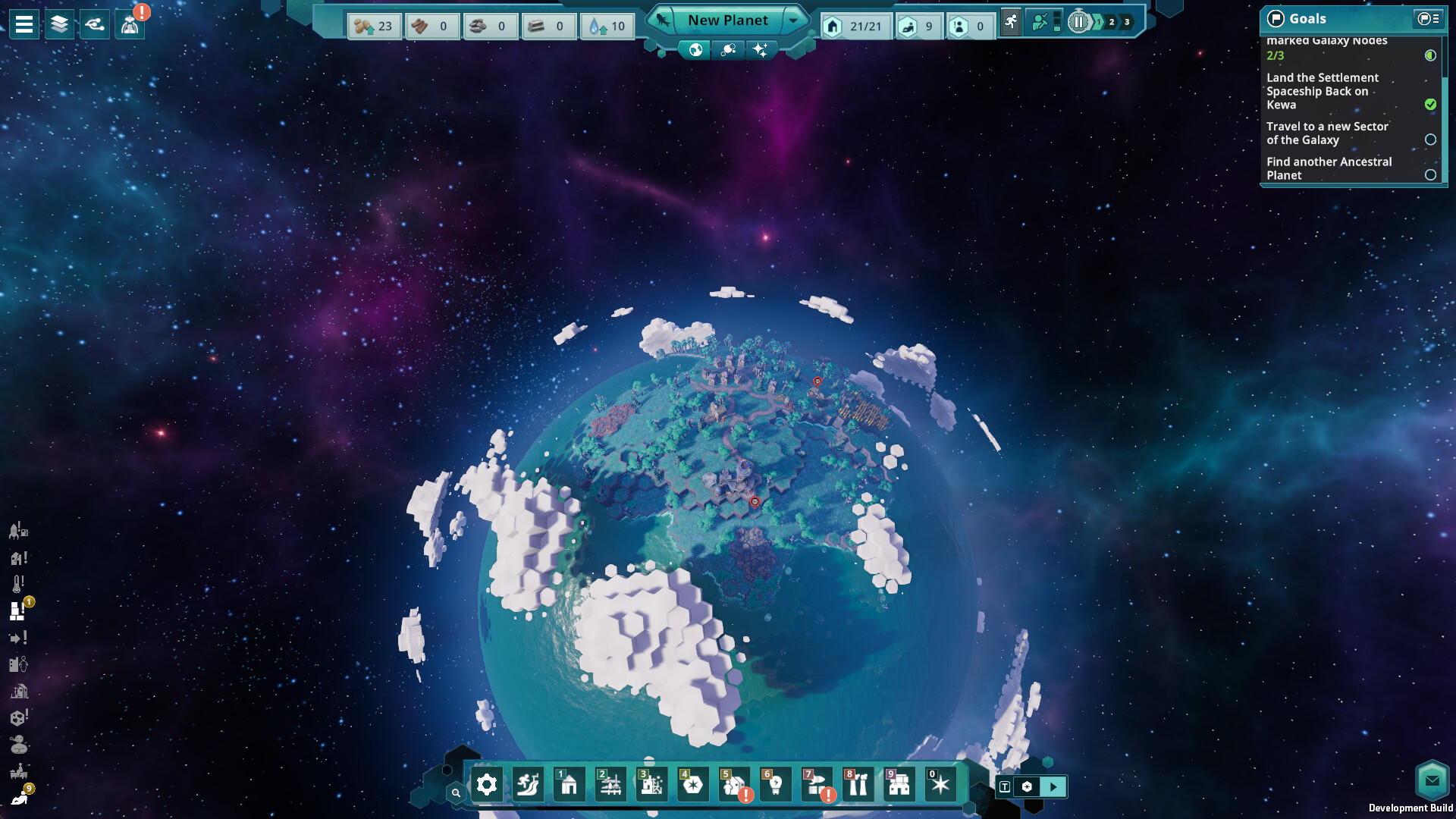
Use the Home Spaceship’s starter supply
The collected Water and Home Spaceship references both identify the starting ship as a source of water. The ship provides basic starter production without external inputs, supporting the settlement while you establish its opening buildings. This gives new players a documented starting point without implying that the source replaces every later need for a larger water supply.
Review what the starting arrangement is supplying before ordering several expansions which will consume the same resource. The dossier identifies Water Pumps as the route toward expanded water production, so the starter supply and the next source belong in the same plan. Keep the decision tied to the water your settlement actually needs rather than an invented ideal number of pumps per citizen.
Expand water production with pumps
Water Pumps are the additional source named in the collected Water material. Their location, access and available supply are therefore part of the first review when a pump is expected to serve a growing settlement. Constructing the building is not the end of that review, because the output still needs to reach the people or production process requiring it.
Inspect the pump and its connection when the expected supply does not appear where it is needed. Establish whether the issue concerns the source itself or the movement of its output before choosing a second pump. This is a diagnostic recommendation based on the documented source, without a claim of unlimited pumping, a universal production rate or a fixed expansion schedule.
Check household drinking access
The collected Peeps reference describes drink resources being brought home, so the supply destination matters alongside the production source. A settlement-wide water inventory can show that the resource exists without establishing that every household can obtain it. Inspect the homes affected by the shortage rather than treating an overall total as the complete answer.
Follow the connection from those homes back toward the water source and any relevant storage arrangement. Keep the household question visible when changing production so that you can see whether the supply actually reaches its intended destination. That approach separates an access problem from a production problem without asserting that one of them explains every instance of missing drinking water.
Include agricultural and industrial demand
Water is used by agriculture and industry as well as for drinking, according to the collected Water reference. The same broad resource therefore belongs to more than one part of the settlement’s plan. A decision to expand production can create an additional water question even when the immediate reason for the project is another manufactured good.
Review the water requirement of the specific production stage you are adding instead of assuming all available supply remains dedicated to homes. Consider the source, stored resource and the workplace expected to receive it alongside household access. This keeps the discussion within the documented uses without inventing a consumption table or an exact priority rule between citizens and industrial buildings.
Keep inventory water separate from terrain water
Water moving through the terrain has a different immediate role from water held as an inventory resource for homes and buildings. The collected atmosphere material connects water flow with reviving forests and expanding breathable land. The collected Water reference concerns the stored supply which people drink and production processes consume.
When you are addressing a shortage, identify which of those conditions you are trying to change before choosing a construction or terraforming action. A drinking-water question should begin with the pump, stored resource and household destination, while a dry-forest question should begin with the surrounding water network. Keeping them distinct avoids treating a visible river as automatic proof that every household has a usable drink supply.
Review water alongside settlement growth
The opening settlement guidance places water together with housing and food, rather than treating it as an isolated later project. Larger residential and production areas need a supply arrangement which still connects to the new demand. Revisit that connection before expanding several water-consuming activities at once.
Make a focused change to the source or access condition you have actually identified, then inspect the result at the affected home or workplace. This follows the dossier’s recommendation to diagnose a particular need before scaling the whole settlement. It does not turn the documented sources into an unsupported claim about the exact reserve or pump count needed for every stage of the game.
Choose the next water check deliberately
When a home lacks drinking supply, identify the source and the stored water associated with the household’s connection. A visible river and a pump’s existence do not answer the same question as resources reaching a home. Reviewing that distinction first keeps your response directed toward drinking access instead of making an unrelated terrain change because both systems involve water.
When the shortage appears in production, inspect the specific agricultural or industrial demand that is missing its input. Water has more than one documented use, so the town’s overall supply should be considered alongside the new workplace expecting it. This approach avoids treating an expansion as an automatic improvement for every consumer merely because it adds another potential source.
If the issue is a dry forest, return to the terrain water network and the condition of that land. The atmosphere research links water flow with revived forest, which is a different immediate task from allocating inventory water for drinking or industry. Using the correct question helps you select a relevant inspection without adding an unverified rule which merges the two kinds of supply.
After correcting an observed issue, inspect the home, workplace or forest that led you to make the change. A useful result is the relevant connection working for its intended purpose, not just another water-related building appearing in the settlement. This completes the diagnostic loop without claiming an unlimited pump source or a population formula the collected references do not establish.
Trace the route of the missing supply
Start by establishing whether the intended water source is available and whether the relevant output reaches a configured destination. Then follow the route toward the home or production process that is missing the resource. These checks keep the investigation connected to the specific supply rather than replacing several parts of the town without locating the obstruction.
The collected research supports the starting ship, Water Pumps, household collection and agricultural and industrial uses. It does not establish an unlimited-source guarantee or a universal population ratio, so those claims are not part of this guide. Continue with the atmosphere guide for forest restoration, or the storage and supply-chain guides when the issue concerns how the produced resource moves through the settlement.
Sources & research scope
Game information on this page comes from the sources recorded in the dated research. Publisher-hosted wiki entries are community-maintained, and review judgments remain attributed to their writers. Planning advice applies those documented systems and does not claim personal playtesting.
- Water — Beyond These Stars Official WikiPublisher-hosted community wiki; mechanics from the collected research snapshot. Cited by name from the dated dossier; this source is not linked here.
- Home Spaceship — Beyond These Stars Official WikiPublisher-hosted community wiki; mechanics from the collected research snapshot. Cited by name from the dated dossier; this source is not linked here.
- Peeps — Beyond These Stars Official WikiPublisher-hosted community wiki; mechanics from the collected research snapshot. Cited by name from the dated dossier; this source is not linked here.