
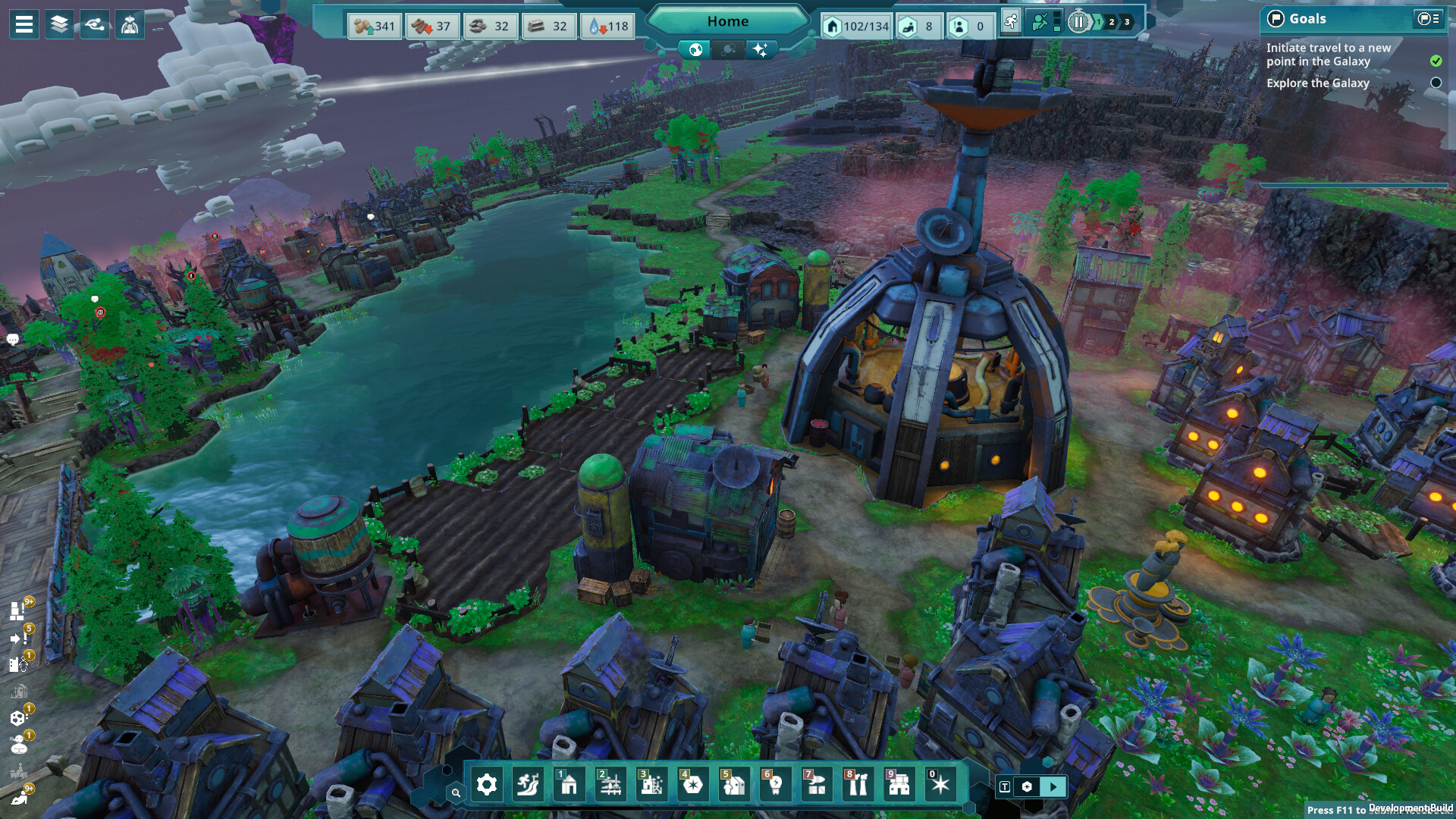
Separate pollution from a toxic area
The Pollution reference distinguishes accumulated pollution from toxicity, so these should not be treated as identical conditions. Pollution is part of the environmental pressure created around a settlement, while a highly polluted area can become toxic and stop ordinary access. That makes prevention useful before the affected district becomes difficult to use.
Inspect the condition of the area you are trying to protect, rather than judging the problem only by whether its factories are still producing goods. A district’s output and the condition of its surroundings are separate things to monitor. Make the next decision in response to the pollution present and the access available there instead of assuming that useful production means the environment is healthy.
Reserve space for forests
The developer replies on pollution recommend planting trees and spacing industry, and the Forest reference supports the role of forests in pollution prevention. Greenery therefore belongs in the district’s plan alongside the buildings you want to place. Reserving room early makes it easier to retain that relationship while the production area expands.
Keep the environmental space visible when adding a new industrial building rather than trying to fit trees into whatever ground remains afterward. Consider which useful adjacency relationships need to be preserved while making room around the producer. This follows the developer’s advice without assigning a universal forest pattern or claiming that trees immediately erase every level of accumulated pollution.
Space industry without isolating its support
Industrial spacing is one of the preventative approaches described by the developer. The same replies also discuss preserving useful positive adjacency and using power lines to support more flexible placement. Moving industry should therefore be considered together with the connections it needs to operate in the new position.
Review a proposed relocation as a complete production decision rather than simply increasing distance between two buildings. Check the surroundings you want to improve and the support you still expect the producer to receive. This gives the spacing decision a practical basis while avoiding an invented safe distance or a promise that all polluting buildings respond identically to relocation.
Address contamination already present
A change to the source of pollution and treatment of pollution already accumulated are different parts of the problem. The collected research specifically warns against assuming that moving a factory removes contamination left behind. Inspect the condition of the old district after a move rather than treating the relocation as proof that its environmental problem has disappeared.
Use that distinction when deciding whether the next task is prevention, cleanup or a review of access. A new industrial location can change the future arrangement without completing the work needed in the previous one. Keeping both areas in the inspection prevents a placement improvement from being mistaken for a verified method of clearing existing contamination.
Supply Cleaners for active treatment
The developer feedback article and Cleaner reference support active cleaning as part of pollution management. A Cleaner needs the support and supplies associated with its work, so placing a building and obtaining useful treatment are separate steps. Check whether the treatment you expect is actually being carried out instead of counting a newly constructed Cleaner as a completed environmental solution.
When a Cleaner is present but idle, investigate its operation separately from a rejected construction request. The placement-troubleshooting guide covers the distinction between a suitable site and a building that has been placed but is not doing useful work. This page keeps the active-treatment discussion within the confirmed mechanism and does not assign an unsupported Cleaner count to every district.
Include Kewa’s wellbeing in the plan
The developer’s Kewa care preview connects environmental health with your companion’s happiness and the progression of the story. Pollution management therefore affects more than the appearance of an industrial district. The health of the living world supporting the settlement belongs in the same planning review as the needs of its Peeps.
Monitor the environmental effects of expansion while checking whether the new buildings are meeting the needs that led you to construct them. Retain room for the preventative forest and spacing decisions described by the developer rather than treating them as optional decoration. This ties industrial growth to the documented relationship with Kewa without inventing a health threshold or a guaranteed story outcome.
Review prevention and treatment as different tasks
For a district that is becoming more polluted, inspect the source and the forest space available before the area loses ordinary access. That is the preventative part of the documented environmental advice. It gives the next placement decision a concrete purpose without implying that trees automatically remove all contamination already accumulated around the existing buildings.
For an area already contaminated, keep its condition in the review even if the original factory has been moved. Changing the producer’s new surroundings and dealing with pollution at its old site are different parts of the plan. The sources support making that distinction, which prevents a real spacing improvement from being presented as a guaranteed cleanup of the ground it leaves behind.
For a Cleaner expected to perform active treatment, examine its operation rather than counting construction alone as useful environmental work. A supplied and functioning treatment mechanism answers a different question from whether another building can be placed. Review the specific situation before applying the construction troubleshooting sequence to an operating problem, or treating a rejected site as a shortage of input resources.
After a focused change, return to the district and the environmental condition that led you to make it. Keep Peep access and Kewa’s health in view alongside the industrial output the area is meant to support. That completes a useful planning review without assigning an unverified toxicity timer, a universal Cleaner count or a fixed guarantee about the story result.
Diagnose early and change one connection at a time
Begin with the district’s condition, identify the polluting source and consider whether the immediate need is prevention or active treatment. Review forest space and industrial support together before relocating a producer, then inspect the contamination remaining in its old area. If the issue involves a Cleaner, determine whether you are investigating placement or operation before choosing the next action.
Exact toxicity timing and build-specific treatment details are not established by this research, so the guide stays with the supported environmental relationships. Its practical purpose is to help you separate the tasks you can inspect instead of prescribing one untested layout or instant cure. Continue with city planning for industrial arrangement, or atmosphere expansion for the water and forest conditions of new habitable ground.
Sources & research scope
Game information on this page comes from the sources recorded in the dated research. Publisher-hosted wiki entries are community-maintained, and review judgments remain attributed to their writers. Planning advice applies those documented systems and does not claim personal playtesting.
- Confusion about pollution — developer repliesDeveloper or official storefront material recorded in the research dossier.
- Forest — Beyond These Stars Official WikiPublisher-hosted community wiki; mechanics from the collected research snapshot. Cited by name from the dated dossier; this source is not linked here.
- Pollution — Beyond These Stars Official WikiPublisher-hosted community wiki; mechanics from the collected research snapshot. Cited by name from the dated dossier; this source is not linked here.
- Dev Blog #29 — Keeping Kewa HappyDeveloper or official storefront material recorded in the research dossier.
- Beyond This Demo: addressing feedbackDeveloper or official storefront material recorded in the research dossier.
- Cleaner — Beyond These Stars Official WikiPublisher-hosted community wiki; mechanics from the collected research snapshot. Cited by name from the dated dossier; this source is not linked here.