
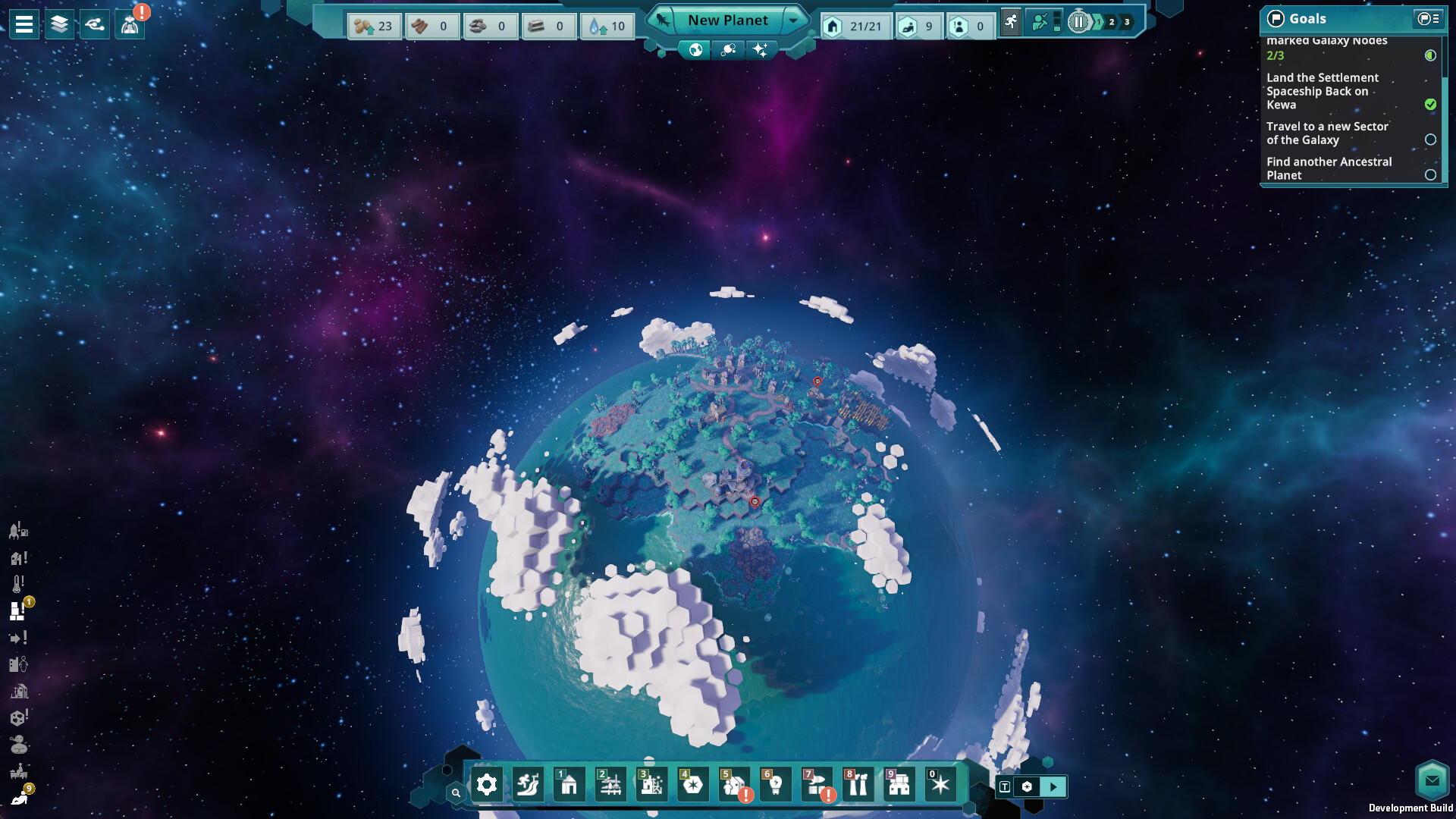
Identify the next usable production stage
Progression is connected to the economy you are building, rather than being described here as a universal sequence of research points. The collected materials identify building prerequisites and production-linked milestones alongside perks. Start with the next useful building or production stage and examine the documented relationship which leads toward it.
A visible target in a progression plan is different from a building that can immediately operate in the current settlement. Keep the source of its inputs and the support it needs alongside the question of when it becomes available. This makes the next unlock a practical settlement decision instead of assuming that availability alone solves the resource need which led you to pursue it.
Use the mining-to-smelting example
The Ore Smelter and Buildings references both describe a relationship between mining output and smelting. The smelting stage then contributes to later industry, giving the collected research a concrete example of production supporting progression. This is a supported connection between stages, not a complete verified launch research tree.
Inspect whether the preceding stage is doing useful work before deciding that the next building needs a different research strategy. A chain that has not supplied the relevant output presents a different immediate problem from a building whose later operation lacks support. Work from the documented relationship you can examine instead of inventing a numerical milestone which the research does not establish.
Separate an unlock from operating a building
A production building still needs the inputs and support associated with its work after it becomes available. The Ore Smelter example includes a power requirement, and the collected storage material explains that full outputs can stop production. Progression, supply and usable output therefore remain connected after the initial availability question has been answered.
Before pursuing another production stage, check whether the current one has a functioning input and output arrangement. Inspect the point where goods are no longer being produced or moved rather than assuming that a further unlock will automatically remove the obstruction. This is the practical distinction in the dossier between reaching a milestone and supplying and staffing the resulting building.
Learn what the updated demo adds
The updated demo announcement explicitly introduces unlockable perks and an in-game Player Guide. It also describes revised explanations and tutorials, so players have an in-game resource for understanding the systems in the version they are using. Consult that resource before turning a brief description of progression into a larger plan for the settlement.
Keep the updated demo separate from older demo impressions and full-game previews when reading about the available systems. A feature described for a different stage of development does not establish the details of every unlock in your current version. The research supports the presence of perks and the Player Guide without supplying a complete list of perk costs, laboratory recipes or optimal numerical choices.
Choose a need before pursuing a perk
The practical research outline recommends prioritizing an immediate bottleneck in food, water, space or production before chasing more complex goods. That gives the next progression decision a concrete purpose in the settlement already on screen. Consider what your current town needs to function more clearly rather than treating every available advancement as equally urgent.
Review the role of a proposed perk or production stage in that need before committing to a wider expansion. Connect the decision to a documented system and the conditions you can inspect in your own settlement. This is planning guidance from the collected material, rather than a numerical claim that one perk build dominates every map or every stage of Story Mode.
Check milestones one step at a time
For an unavailable building, separate the prerequisite from any production milestone leading toward it. For an available but idle building, review staffing, supplies and output capacity instead of continuing to troubleshoot its unlock. These are different questions which can appear close together when a new industrial stage is added to the town.
Make a focused correction, observe the affected stage and then reassess which progression question remains. This keeps the plan attached to usable production rather than a series of assumptions about what the next unlock will do. It also avoids treating conflicting descriptions of a particular building’s prerequisites as grounds for a universal rush strategy.
Connect the next unlock to a usable settlement
Before choosing another progression target, identify the resource or settlement need it is intended to address. The collected material supports planning around food, water, space and useful production rather than chasing every more complex good immediately. Keeping the purpose visible helps separate a genuine next stage from an advancement which would still lack the support needed to operate in the current town.
For a production-linked prerequisite, examine what the previous stage is actually delivering. The mining-to-smelting example gives the research a concrete relationship to inspect without supplying a universal numerical threshold. A milestone that depends on useful output belongs to the operating chain as well as the availability question, so those two reviews should remain connected.
Once a building becomes available, check its inputs, workers and output destinations before treating the unlock as a completed solution. The collected production and storage mechanisms remain relevant after availability changes. This keeps the progression plan practical without inventing a complete research-point economy or assuming that the next stage automatically clears an existing industrial blockage.
Use the updated demo’s Player Guide when the next question concerns a system description or the role of a perk. Then compare that explanation with the need you are trying to resolve in the settlement already on screen. The approach is grounded in the documented guide and progression relationships, rather than a claimed optimal perk build or an unverified fastest route through the game.
Keep the progression plan within the evidence
The collected research identifies real building relationships, the updated demo’s perks and the Player Guide, but not a complete independently verified research order. This guide therefore uses those relationships to organize a decision rather than reproducing a fabricated full tree. A source-bound plan can still help you decide whether the next task concerns availability, supplies or the output of the preceding stage.
For a material shortage in that plan, continue with the resource and supply-chain guides. For a stopped stage whose inputs appear to be available, inspect the storage destinations for its main output and by-products. Those focused guides expand the documented production questions without adding unverified research-point totals or a guaranteed fastest route through progression.
Sources & research scope
Game information on this page comes from the sources recorded in the dated research. Publisher-hosted wiki entries are community-maintained, and review judgments remain attributed to their writers. Planning advice applies those documented systems and does not claim personal playtesting.
- Beyond These Stars — New Demo Launch!Developer or official storefront material recorded in the research dossier.
- Ore Smelter — Beyond These Stars Official WikiPublisher-hosted community wiki; mechanics from the collected research snapshot. Cited by name from the dated dossier; this source is not linked here.
- Buildings — Beyond These Stars Official WikiPublisher-hosted community wiki; mechanics from the collected research snapshot. Cited by name from the dated dossier; this source is not linked here.
- LadiesGamers: Beyond These Stars ReviewAttributed PC review coverage; opinions and build observations belong to the reviewer.